

LinkedIn’s expansion helped underwrite a new era of radical transparency, promising a level playing field for job seekers, a digital meritocracy, and an unbeatable offer of direct access to the world’s top recruiters.
Those promises helped the platform become one of the nation’s top professional job networks — gaining nearly a billion users in just two decades.
But when the platform began selling itself as an indispensable job board, LinkedIn faced a structural conflict in its business model: how to keep its “Talent Solutions“ revenue climbing in periods where the white-collar hiring market is cooling.
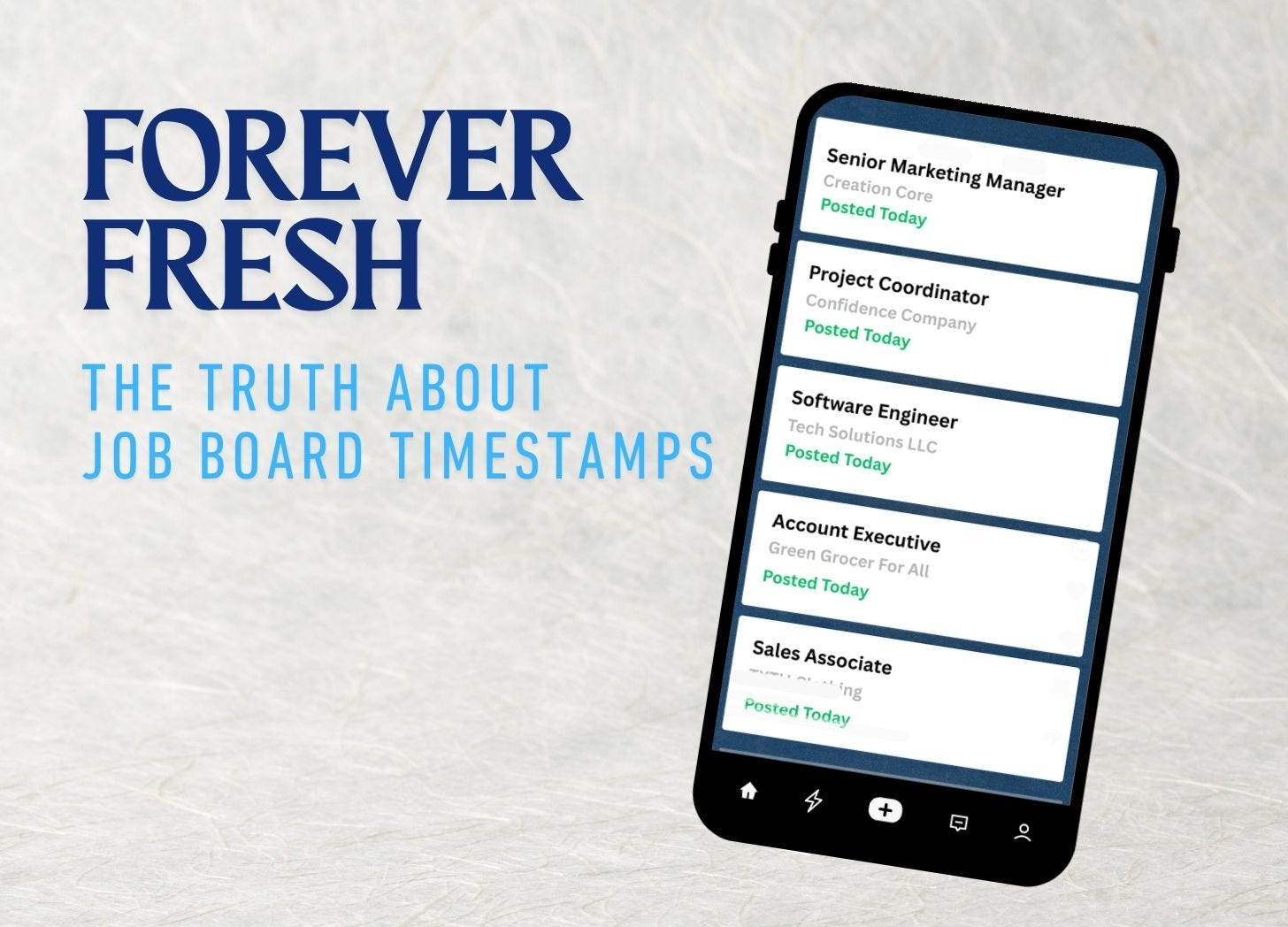
Posted “3 hours ago” suggests urgency. It implies a live search, an active hiring manager, a real opportunity still within reach.
But that signal doesn’t always mean what it appears to.
Across major job platforms, including LinkedIn, the date a listing is shown to candidates is not necessarily the date the job was first posted. Internally, two versions of the same information can exist at once: the original posting date a platform records, and the refreshed timestamp it shows to candidates.
The result is a system where older listings often appear new to candidates.
Margaret Buj, a Talent Acquisition Manager and Interview Coach, has seen the disconnect leave at least one candidate “understandably frustrated.”
Pat Whelan, Head of Careers Products at LinkedIn, told Cereese Receipts in an email that “[l]ast year, we started showing a ‘Reposted X days ago’ label on job listings so it’s clearer when a role has been re-listed. Our hiring insights also provide valuable details like a company’s typical response time, whether they’re actively reviewing candidates, and if a job is promoted. Our goal is simple: help job seekers focus on opportunities where they’re more likely to hear back.”
But platform behavior does not always align cleanly with that assurance.
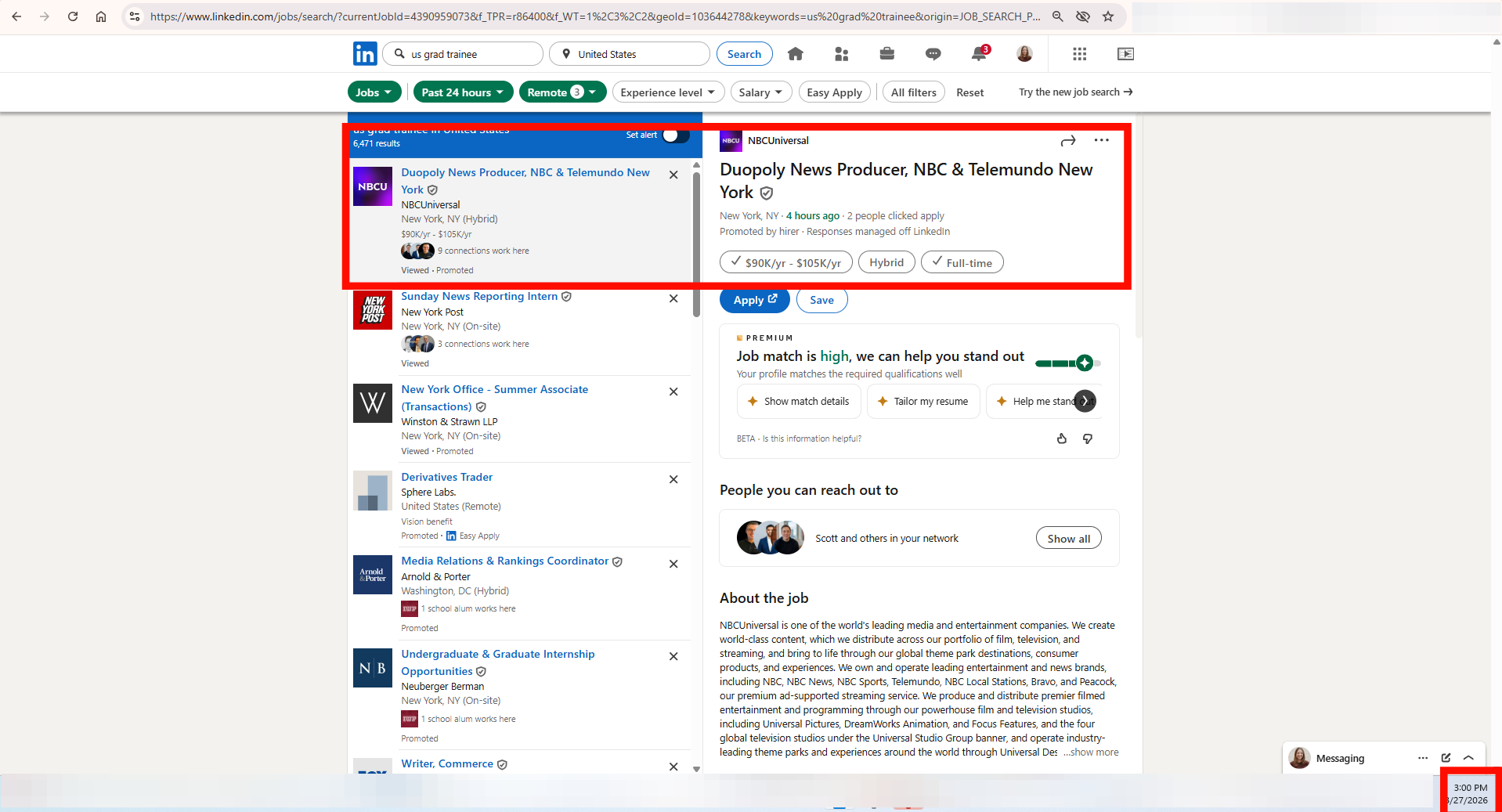
On March 27, a job listing on LinkedIn displayed a recent posted “3 hours” timestamp to candidates. It also appeared when filtered under “Past 24 hours.”
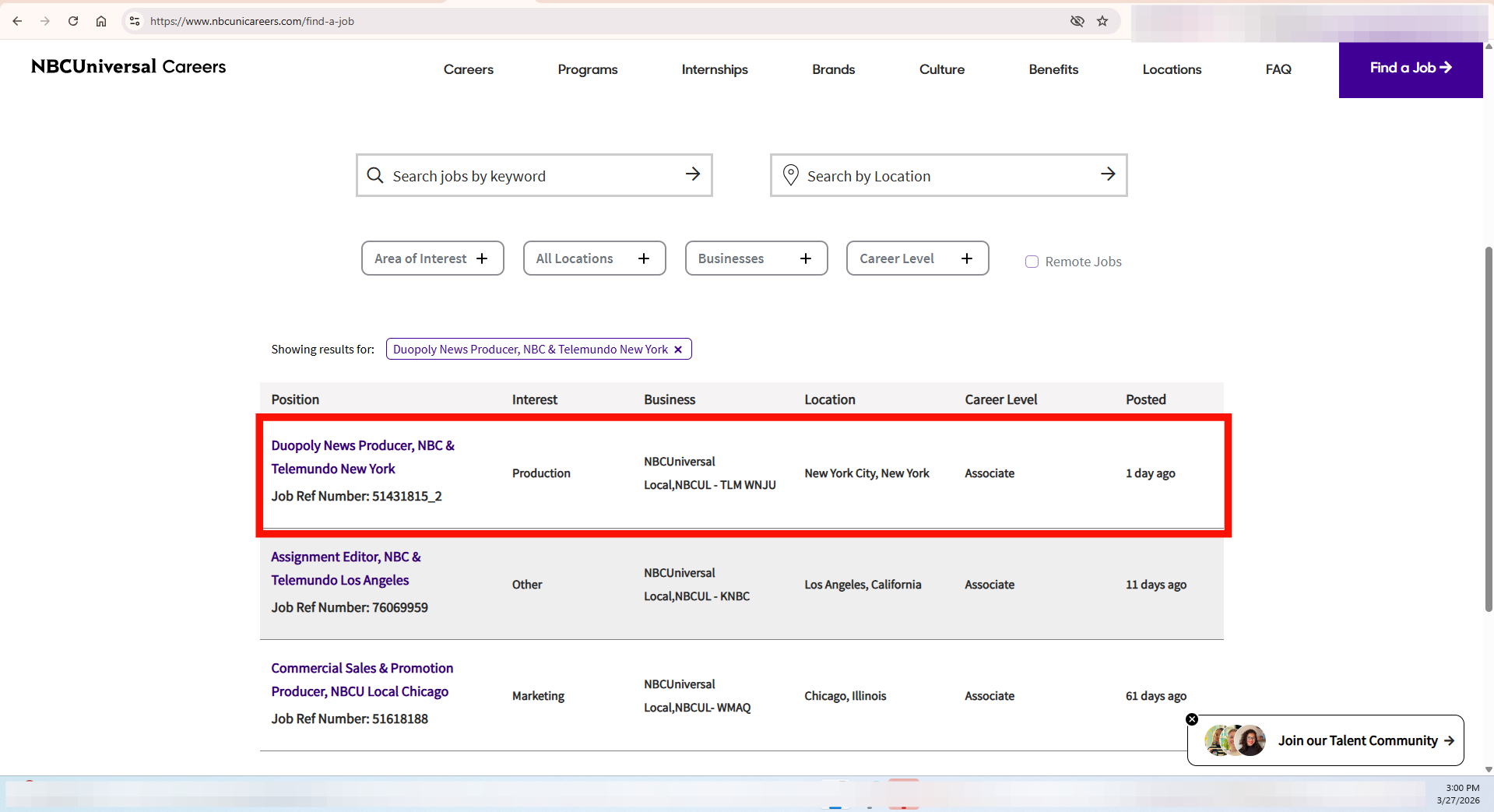
On the employer’s own careers page, the same role showed a publication date from the day before.
There was no indication on LinkedIn that the listing had been refreshed or reposted. No label distinguishing original publication from renewed visibility. No context connecting the two timelines.
This isn’t a glitch. It’s how the platforms are built.
When asked directly why the “Reposted” label did not appear on the specific listing, LinkedIn responded: “The posted date on LinkedIn jobs doesn’t always match the date on the employer’s career page because we display the date when the job was ingested into our system, not when it was originally posted on the employer’s site. We take this approach to ensure consistency and reliability, as we don’t control how employer pages display information and not all employers provide a visible or standardized posting date.”
The response explains why dates might differ between platforms. It does not explain why the “Reposted X days ago” label that LinkedIn says it introduced last year did not appear on a listing that showed as “3 hours ago” on the platform but dated the prior day on the employer’s site. It sidesteps the core question: why does LinkedIn show a freshness signal that doesn’t reflect the actual posting date?
The timestamp problem didn’t appear overnight. In 2023, LinkedIn’s “Talent Solutions” business, which includes sponsored job postings, crossed $7 billion in revenue for the first time. The company achieved this growth — even in a cooling job market — not by posting more jobs, but by making the “promoted” jobs even more valuable to the employers paying for them.
According to LinkedIn’s own support documentation, employers who don’t pay for “promoted” jobs face strict limits on their postings. Once those limits are reached, the listing is “paused” and application volumes drop.
If the employer chooses to promote the post, the listing gets a new injection of visibility. It climbs back up search results. It triggers mobile notifications to candidates. It shows up in job recommendations. LinkedIn’s documentation confirms that promoted posts reach on average three times more applicants than free ones and stay active until the employer closes them.
A listing that gets promoted effectively gets a second life, but the timestamp doesn’t reset to reflect that. The “Reposted” label was supposed to fix this. When it doesn’t appear, job seekers have no way to know they’re looking at a listing that may have been cycling for weeks.
Indeed took this further.
Recruit Holdings, Indeed's parent company, maintained revenue growth even as total job postings declined through a price over volume strategy. This means the platform increased the cost per ad faster than volume fell. According to Bloomberg, average unit price growth rose to around 15% in the most recent reporting period, driven by premium advertising packages.
That same strategy coincided with shrinking organic visibility. In 2023, the platform shifted away from displaying specific posting dates in public search results. By May 2024, it cut off organic visibility for staffing agencies — requiring them to sponsor listings to appear broadly in search results.
Job boards like LinkedIn and Indeed process millions of listings. To sort through them, job seekers lean heavily on filters — among them, the option to search by “posted today” or “posted within the last 24 hours.”
The logic is straightforward: get in early, get human eyes on your resume before the crowd arrives and the algorithm buries it. Applications submitted within the first four days of a listing going live can be up to eight times more likely to result in an interview, according to research from TalentWorks. For roles that draw hundreds of submissions, recency is one of the few edges a candidate has left. So they refresh obsessively, going all-in on anything marked “posted today.”
But the house is playing with a marked deck.
ATS systems refresh listings every few weeks to keep postings from sinking in search results. The cards are the same.
“In practice, a listing can sometimes appear fresh again because it has been renewed, re-synced, edited, or redistributed via the ATS or LinkedIn posting workflow, even when the role itself is not actually new,” Buj explained.
Jon Hernandez, a teacher living in New York, leaned heavily on date filters during his job search last year. The timestamps helped him decide which postings were worth a tailored cover letter and resume.
“If I saw one that was very recently posted, then I want to jump onto that,” Hernandez said. “But if I saw that it was a couple months ago and they’re still looking — to me, that is a huge red flag.”
To Hernandez, a role that goes unfilled for months signals something is wrong — an undesirable job, a toxic workplace. So he focused his energy on anything fresh. But when he clicked through to the company’s own career page, the dates didn’t always match what the job board showed. “When I clicked on the job description, I noticed that the timeframe was much different than what the job board said.” This occurred on platforms including LinkedIn and Indeed.
Mike Podesto, CEO of Find My Profession, says the behavior candidates find confusing isn’t strategic deception — it’s industry standard.
“Most job posts are tied to ATS or job boards that automatically refresh them every few weeks so they stay near the top of search results,” Podesto said. “If they don’t, the posting basically disappears and applications drop off.”
He’s also seen employers keep roles active mid-process rather than risk restarting a search if a finalist falls through. “From the employer side, it’s usually less about reposting the job and more about keeping the pipeline alive until they’re confident they’ve got the right person.”
Podesto confirmed that employers are aware candidates filter by recency, even if indirectly. “When a job is newly posted or refreshed, applications spike. When it ages, it drops off significantly.” When asked whether employers would prefer a label like “actively hiring” over “posted today,” he said many probably would. The current system, he noted, creates “a bit of a mismatch between what candidates assume and what’s actually happening behind the scenes.”
LinkedIn and Indeed control roughly 55% of the U.S. job posting market, according to data from competitive intelligence platform 6Sense. Both maintain internal records of when jobs first went live. Both could show candidates that information. They don’t.
Although Indeed stopped displaying posting dates in mid-2023, the platform’s developer documentation confirms it tracks two internal date fields: one for the original publication, one that resets with each repost. Candidates see neither. Indeed did not respond to a request for comment.
When timestamps generate more applications, platforms report stronger engagement to employers paying for premium visibility. That’s the business model. What’s missing is transparency. Neither platform’s help center clearly explains to job seekers how automatic renewals, ATS-driven re-indexing, or a listing can look brand new weeks into a search.
The Federal Trade Commission has moved against platforms that manipulate user behavior through misleading cues and manufactured urgency. Job board timestamps have largely escaped that scrutiny.
Buj put it plainly: “I would be cautious about treating ‘posted today’ as proof that a job is newly opened or that candidates are getting in at the start of the process.”
A fix isn’t technically complicated. Display the original posting date alongside the renewal date or adopt a label like Podesto’s suggested “actively hiring” — a distinction that would cost the platforms little and clarify a lot.
Neither platform has indicated plans to make that shift. In the meantime, job seekers like Jon Hernandez will keep betting on a signal that doesn’t always mean what it says. He still jumps on “Posted today” listings. Only now, he checks the company’s career page first.
MESSAGE ME — Are you seeing something broken in how platforms operate? Work at a company with misleading practices? Have internal docs that contradict public messaging? I want to hear from you. Email me at cereeseblose@gmail.com or message me on Signal: cereeseblose.57
Cereese Receipts is an independent publication. I believe understanding economy, business and tech should be accessible to everyone.
If you enjoy my writing, you can support it by sharing, commenting, or liking—or by sending a small donation through Buy Me a Coffee. It’s an easy way to say thanks and support independent writing.