

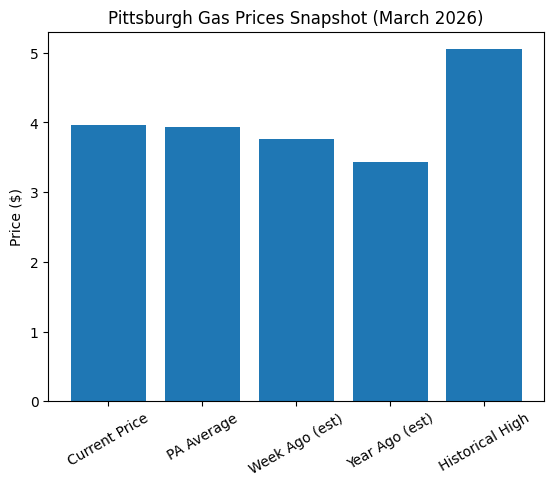
Gas prices are rising again in 2026. They jumped 22 cents in Western Pennsylvania just this week according to AAA.
So if you’re double-checking the pump and skipping a Sheetz run, you’re not alone.
But experts warn the current global oil shock could send prices so high, $3.96 per gallon might start to feel cheap.
That’s because the world is barreling toward the biggest oil shock in modern history according to the head of the International Energy Agency, Fatih Birol.
Why are gas prices rising right now in 2026?
The world is loosing about 11 million barrels of oil per day, according to the head of the International Energy Agency.
For context, the 1973 oil crisis and the 1979 oil crisis each knocked about 5 million barrels per day offline.
This current supply shock is worse than those two combined.
It’s happening because a narrow stretch of water called the Strait of Hormuz carries about 20% of the world’s oil supply. Right now, that flow is heavily restricted.
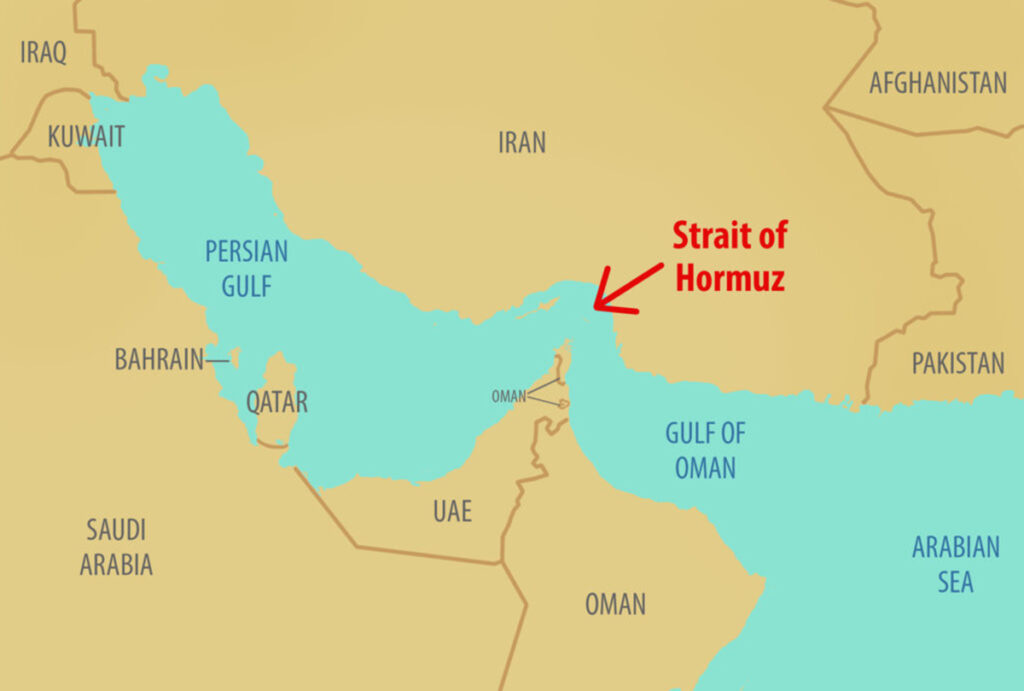
At the same time, key energy infrastructure is taking hits. In Qatar, major LNG export facilities have been damaged. It could take up to five years to repair.
Put it together, and you see why Birol warns of the global economy entering uncharted territory” and “facing a major, major threat.”
Why isn’t gas already $5?
Three reasons (and none of them are reassuring.)
Temporary buffers
Governments are racing to release oil onto the market. The IEA just coordinated the release of over 400 million barrels to counter price surges. That’s the largest release of strategic reserves in history. This won’t fix the problem, but it softens the initial hit.
The shock is still new
We’re only about three weeks in. During the 2022 energy spike after Russia invaded Ukraine, it took months for prices to peak. The oil release on March 11 could end up lasting just 26 days if oil products are choked off at the current rate of 15 million barrels per day.
Markets are unsure
Talk of possible negotiations, immediate denials, and uncertainty about how long this disruption will last is keeping prices from settling into a clear upward march.
“But isn’t the U.S. energy independent?”
The United States has been a net exporter of energy since around 2020. Pennsylvania itself sits on major shale reserves.
But oil doesn’t work like a local farmers market. It’s priced globally.
That means the price you pay in Pittsburgh is tied to disruptions happening thousands of miles away — even if some of that oil started in Pennsylvania.
We’ve seen this before.
In 2022, Pittsburgh gas prices climbed steadily before peaking at $5.05 per gallon.
Right now, you’re at $3.96 — already up 15.5% from last year.
Being “energy independent” doesn’t mean being insulated.
This isn’t the 1970s
Back then:
The U.S. imported far more oil
There was no large strategic reserve
Supply shocks hit harder, faster
Today:
The U.S. produces more energy
There’s a massive stockpile
Governments are coordinating responses globally
But there’s a tradeoff: today’s system is deeply interconnected.
When something breaks, it affects everyone.
When will prices ease?
No one knows.
Even if a best-case scenario happens and oil started flowing normally again, prices won’t snap back.
Damage to regional infrastructure could take years to fix.
Birol put it bluntly:
“It will take some time to come back to the normal days we had before.”
What should you watch for?
If you want to know where this is going, keep an eye on a few signals:
1. Weekly price jumps
Right now, Pittsburgh is seeing about a 5% weekly increase. If that pace continues, $5 gas will happen in weeks.
2. Strategic reserve announcements
If those slow down, prices could accelerate quickly.
3. The situation around the Strait of Hormuz
As long as it’s restricted, supply stays tight.
4. War developments
Although a resolution won’t bring instant relief, escalation will make everything worse.
What are your thoughts on the convergence of two opposing energy pressures—namely, war-driven spikes in gasoline prices and the simultaneous rise in electricity costs driven by the rapid expansion of data centers?
Historically, increases in gasoline prices have nudged consumers toward electric vehicles. However, that dynamic may be shifting. The growing energy demands of large-scale data infrastructure are placing increasing strain on the electrical grid, contributing to a notable rise in electricity costs. As a result, both primary vehicle energy sources—gasoline and electricity—are becoming more expensive at the same time.
With no clear indication of where either will peak, this creates a uniquely uncertain landscape for consumers. Could this dual pressure accelerate interest in alternative fuels such as hydrogen, natural gas, or propane? And from an investment perspective, how should one evaluate opportunities in such an unpredictable environment?
Adding to the uncertainty is the broader policy landscape, where political leadership—including unpredictable figures like Donald Trump—can introduce further volatility in energy markets and long-term planning.